Wendys Allergen Menu
We created a practical hub to help people compare items and plan orders with more confidence at U.S. locations.
This page points to the official allergen information guide and shows how to read it. We explain where to verify ingredients and what to ask staff before ordering.
Our layout follows how people order: burgers, chicken, breakfast, salads, sides, condiments. That makes it easier than digging through a PDF.
We also cover cross-contact risks like shared fryers, grills, and buns, and we flag limited-time items that change quickly.
We note the website and app can help with “hold” options, but we still recommend confirming details in-store for higher-risk allergies.
This directory is for U.S. restaurants and is informational only. It does not replace medical advice or on-site verification with staff.
How We Use Wendy’s Allergen Information to Order With Confidence</h2>
To plan safe orders, we begin with the official guide PDF, then check the company website and the mobile app. The PDF (“Allergen Information-Dec-25.pdf”, Dec 2025) is our baseline because it lists ingredient declarations and formal allergen statements.
Next we cross-check the website and app for recent changes. If the sources disagree, we flag the item and recommend verifying with staff before ordering.
- “Contains” means the ingredient is present; “may contain” signals possible contact during prep.
- “May contain” often reflects shared equipment or prep areas that increase cross-contact risk.
- Restaurants, suppliers, and limited-time items can change ingredients or procedures quickly.
| Source | When to Use | What It Shows |
|---|---|---|
| Official PDF | Baseline reference | Declared ingredients and allergens |
| Website | Check for updates | Current items and ingredient notes |
| App | Order-time verification | Latest menu options and substitutions |
We also urge readers to confirm buns, sauces, and toppings at their specific restaurants. Customization helps lessen exposure, but it does not remove cross-contact risks. Use these checks as a planning tool and then ask staff for final verification.
Must-Read Allergy Notes Before You Order (Cross Contamination & Kitchen Risk)
Kitchen operations can turn an ingredient-safe choice into a risky one; here’s what we watch for.

Many locations cook fried items in a shared fryer. That means french fries and chicken nuggets can pick up proteins from other foods. Even if the listed ingredients are free of an allergen, cross contamination on equipment can create a real exposure risk.
Fryer oil is vegetable oil — commonly soybean, canola, and/or cottonseed oil. If you react to a specific oil, ask which oil the restaurant uses. Oil type can matter for sensitive diners and affects how we assess fryer risk.
Burgers and chicken are seared on a shared grill, and buns go through a common toaster. Cheese or butter used on the same surfaces can transfer milk. Buttering buns is not standardized and can vary by franchise or manager, so confirm bun prep at each location.
- When an allergy is severe, treat kitchen cross-contact like an ingredient listed as present.
- Ask staff about fryer separation, oil type, grill handling, and whether buns are toasted or buttered.
- If doubt remains, consider alternate items or speak with a manager before ordering.
| Equipment | Typical Practice | Primary Cross-Contact Risk | What to Ask |
|---|---|---|---|
| Fryer | Shared for multiple fried foods | Proteins from other foods; oil residues | Are fries and nuggets cooked in a shared fryer? |
| Grill | One surface for burgers and chicken | Cheese and milk transfer; meat residues | Is a separate area used for allergen-free patties? |
| Toaster / Bun Prep | Common toaster; bun buttering varies | Wheat, milk residues | Are buns toasted or buttered per order? |
Wendys Allergen Menu: Quick Picks by Menu Category</h2>
This section gives short, practical tips by category to simplify on-the-spot decisions. Use these quick picks as a starting shortlist before you check ingredient labels or ask staff.
Burgers and buns: remove cheese, choose buns carefully
Remove cheese to lower milk exposure and ask if the Premium Bun contains milk at your location. Sandwich buns may differ by store, so confirm which bun a cook will use.
Chicken sandwiches, tenders, and nuggets: fryer and bun swaps
Fried chicken filets, nuggets, and tenders often share fryers with other foods. Ask whether fries and chicken use the same fryer and request a bun swap if needed.
Breakfast, salads, and sides: quick flags
For breakfast, watch eggs, cheese sauce, and bread choices (English muffin vs. biscuit or croissant). Some salads include cheese blends that can’t be removed. Baked potatoes can be plain, but fries and seasoned potatoes carry fryer risk. Chili may be labeled “contains milk” because of grill handling rather than an ingredient in the recipe.
- We give a skimmable directory so you can find relevant menu items fast.
- These notes highlight the biggest cross-contact and ingredient flags.
- Always verify at your restaurant—preparation and labels can vary across U.S. locations.
| Category | Top Risk | What to Ask |
|---|---|---|
| Burgers | Milk from cheese, bun variations | Does this bun contain milk? |
| Chicken | Shared fryer | Are chicken and fries cooked together? |
| Sides | Fryer or grill handling | Can this be prepared separately? |
Burgers & Sandwiches: Custom Order Options That Help Avoid Common Allergens</h2>
When ordering burgers and sandwiches, small custom choices can lower exposure to common triggers. We focus on removals and swaps that change the ingredient profile in a meaningful way.

Removing cheese, bacon, and sauces to reduce milk and egg exposure
Remove cheese and bacon to cut direct milk and pork exposures. Skip mayonnaise-style sauces when egg is a concern and choose ketchup or plain mustard instead.
Even without cheese, patties may touch milk-containing items on a shared grill. Ask staff about grill handling if your reaction is severe.
Choosing the right bun: premium bun vs. sandwich bun (location-dependent)
Premium buns can contain milk at some locations, while sandwich buns may not. All buns are toasted in a common toaster, so confirm which bun a restaurant uses before you order.
Bun-less ordering for wheat-sensitive guests (not certified gluten-free)
Ordering bun-less removes wheat from the assembly, but it is not a certified gluten-free option. Shared prep surfaces and toasting mean cross-contact risk remains.
- Ask: “No cheese, no sauce, and please confirm which bun you’re using today.”
- Prefer in-store or app customization so staff can confirm ingredients for specific items.
- These steps reduce exposure but do not guarantee allergen-free preparation.
| Bun Type | Common Risk | What to Ask |
|---|---|---|
| Premium bun | May contain milk | Does this bun contain milk? |
| Sandwich bun | Varies by location | Which bun is used for this sandwich? |
| Bun-less | Removes wheat ingredient; cross-contact possible | Can this be prepared on a clean surface? |
Chicken Nuggets, Tenders, and Chicken Sandwiches: Allergen Guide Highlights</h2>
Below we highlight process-sensitive risks tied to nuggets, tenders, and sandwiches and what to ask at the counter.
Regular vs. spicy nuggets — what to ask
Regular and spicy nuggets can use different coatings or spice blends that alter ingredients. Ask whether the spicy recipe adds dairy, wheat, or shared-seasoning mixes. Supplier changes and limited-time rotations can also change formulations.
Shared fryer questions we recommend asking
Confirm if fried foods share the same fryer that day. Ask specifically: have milk-containing foods been cooked in this fryer? Is oil shared across multiple foods?
Grilled vs. crispy: allergens and nutrition
Grilled chicken often reduces fryer-related cross-contamination and lowers fat and calories. It still can touch shared grills or buttered surfaces, so grill handling matters for milk transfer.
- Treat chicken items as process-sensitive — prep matters as much as ingredients.
- Verify dipping sauces separately; a safe filet plus a sauce can reintroduce milk or egg.
- Use online or app customization for notes, but confirm execution in-store.
| Item | Primary risk | What to ask |
|---|---|---|
| Nuggets/Tenders | Shared fryer | Are nuggets cooked in a shared fryer today? |
| Crispy sandwich | Fryer and coating ingredients | Does the coating contain milk or wheat? |
| Grilled sandwich | Shared grill/toasted bun | Is this grilled on a separate surface and what bun is used? |
French Fries, Potatoes, and Chili: Sides With the Biggest Allergen Questions</h2>
Simple-sounding sides create complex allergen questions because of shared equipment and last-minute toppings. We cover the most common side issues so you can ask the right questions before you order.
French fries and cross-contamination in shared equipment
French fries and other fried items often cook in a shared fryer. That means fries may pick up proteins from other items cooked there.
Fryer oil is vegetable oil, commonly soybean, canola, or cottonseed. If a specific oil matters for your diet, confirm it with staff.
Plain baked potato versus loaded toppings
A plain potato is the lowest-risk side on paper. Additions like cheese, bacon, or sour cream quickly raise allergen exposure.
Request plain builds when you need fewer ingredients. Ask staff to hold toppings and confirm how they are handled before assembly.
Why chili may show “contains milk” on labels
Chili ingredients may not list milk, yet it can be labeled “contains milk” if staff sometimes add chopped patties or use cheese-handling processes nearby.
For severe reactions, verify whether any cheeseburger patties or cheese-touched utensils are used near chili prep.
- Ask if fries share a fryer with breaded or dairy-containing items.
- Order a plain potato and add toppings yourself when safe.
- Confirm whether chili prep ever involves patties or cheese-handled tools.
| Side | Primary risk | What to ask |
|---|---|---|
| Fries | Shared fryer cross-contamination | Are fries cooked in a shared fryer today? |
| Baked potato | Toppings (cheese, bacon) | Can you serve this plain and hold toppings? |
| Chili | Labeling from grill handling | Has chili contacted cheeseburgers or cheese-handled tools? |
Salads & Dressings: Building Safer Menu Options</h2>
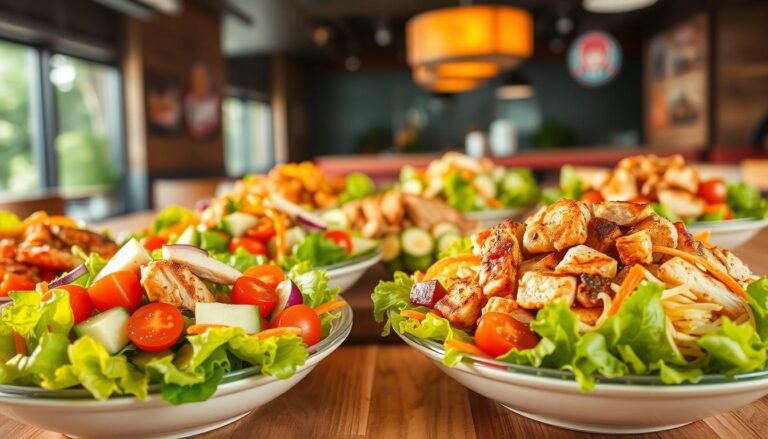
A salad’s base is simple; dressings and add-ons determine whether it fits your dietary needs. We treat salads as useful for adding vegetables, but we do not assume they are lower in allergens.
Apple Pecan Salad: ask to skip blue cheese and roasted pecans to reduce milk and tree-nut exposure. Confirm that the base blend is not pre-mixed with cheese, since some salads cannot be made dairy-free.
Dressings and toppings are the main hidden sources of milk, egg, and wheat. Pomegranate vinaigrette is often dairy-free; still, check ingredient listings or packet labels before you use it.
Grilled chicken adds protein but may be seared on a shared grill. If milk transfer matters, ask where the chicken is cooked and request it on the side.
- Choose simple toppings and request questionable items on the side.
- Use half the dressing or bring your own when possible.
- Confirm ingredients for any packaged dressings or croutons.
| Salad | Common allergens in add-ons | Safe ordering tip |
|---|---|---|
| Apple Pecan Salad | Blue cheese (milk), roasted pecans (tree nuts) | Skip cheese and pecans; ask to hold pre-mixed cheese |
| House blends with cheese | Cheese (milk) often built into blend | Choose a different salad or verify base |
| Salads with chicken | Grill contact may transfer milk | Request chicken on the side and confirm cooking surface |
For dressing and sauces, see our condiments and sauces section next so you can finalize safe choices before ordering.
Condiments, Dipping Sauces, and Menu Components (Buns, Tortillas, Toppings)
Components like buns, wraps, and sauces are often the hidden sources of allergens in an otherwise safe order.

We list common bread and wrap components: English muffin, tortilla, sandwich bun, and the seasonal pretzel bun. All breads are toasted in a shared toaster, so ask how your bun will be handled if wheat or cross-contact is a concern.
Breads and wraps to check
- English muffin — may be used for breakfast items; confirm ingredients.
- Tortilla — different fillings change exposure; check for wheat or corn ingredients.
- Sandwich bun and seasonal pretzel bun — ask if the bun contains milk and whether it’s toasted.
Condiments and ketchup guidance
We note ketchup can be labeled as “contains egg” because of prep-area contact with mayonnaise. Request sealed ketchup packets to reduce that cross contact.
Sauces and toppings to verify
Some dipping sauces contain egg (for example, honey mustard or signature styles). Ranch-style options frequently contain milk. Also check garlic sauce, roasted mushrooms, and seasonal onion toppers, which can include dairy.
| Component | Primary risk | What to ask |
|---|---|---|
| Bun / Pretzel bun | May contain milk; shared toaster | Does this bun contain milk and will it be toasted? |
| Ketchup / packets | Prep-area cross contact with egg | Can I get sealed packets instead of pump-prepared ketchup? |
| Dipping sauces | May contain egg or milk | Does this sauce list milk or egg on the cup or guide? |
We treat these components as the hidden layer: the right protein can become unsafe if a bun, sauce, or topping changes. Always verify ingredients and handling at your specific restaurant, especially during limited-time items.
Where to Find Wendy’s Locations in the United States and Keep Updates Current</h2>
Before you go, verify location details, hours, and online ordering options so you reduce surprises at the counter. We use the official website to find addresses, confirm store hours, and start an order when timing matters.
Using the website to check restaurants, hours, and online ordering
Search the website for nearby restaurants and current ordering links. The site shows store hours and whether pickup or delivery is available that day.
Verify allergen information at your specific restaurant
Ingredients, handling, and sourcing can change by location and time. For higher-risk allergies, call ahead or ask to speak with a manager during non-peak hours.
- Locate the nearest restaurants and confirm hours before you leave.
- Use the website as the starting point, then verify in-store details.
- Re-check the allergen guide and confirm when promotions or items rotate.
| Step | Why it matters | Quick action |
|---|---|---|
| Find restaurant | Hours and address vary | Use the website search |
| Confirm items | Limited-time items change ingredients | Check current menu and ask staff |
| Call ahead | Gives staff time to answer | Speak with manager during slow hours |
Our Final Safety Reminder for Food Allergies at Wendy’s</h2>
We want to leave you with a clear, practical safety reminder before you order. Commercial kitchens run fast and use shared equipment, so no ingredient list can remove all cross-contact from food.
Use our directory to narrow safe menu options, then confirm specifics at the counter. Ask staff or a manager about fryers, grills, toasters, and how a requested change will be handled.
Removing an ingredient lowers exposure but does not guarantee an allergen-free result. Product names, items, and sourcing change often, so always re-check before repeating a past “safe” order.
We aim to be a living reference for U.S. guests: verify, simplify your order, and avoid uncertain sauces or toppings when needed.