Wendys Gluten Free Menu
We introduce what this guide means for ordering today at a major fast-food brand that began in 1969 in Columbus, Ohio and now runs 6,700+ locations across 30+ countries.
Our aim is practical. Fast food often carries higher risk of cross-contact, so we focus on clear choices using published ingredient and allergen details. We separate items that are gluten-free by ingredients from those that depend on how food is prepared.
We preview safer categories: bunless burgers, modified salads, baked potatoes, chili, Frosty and drinks, and we name items to avoid. This piece is for people managing gluten sensitivity or avoiding wheat; those with celiac disease should note many shared-kitchen situations remain risky.
Ultimately, we want an actionable ordering playbook: what to order, how to modify it, which questions to ask, and when to walk away. We keep this guide rooted in real-world kitchens and restaurant practices.
What to Know Before Ordering Gluten-Free at Wendy’s in the United States
Ordering with dietary limits at a busy burger chain requires more than scanning an ingredient list. We need to read how items are made and where shared handling can add unseen contaminants.
Why “gluten-free” at quick-service often means “gluten-friendly”
Ingredients may lack wheat, but preparation can change that. Shared grills, tongs, and assembly lines move crumbs, sauces, and batter bits between items.
That shared handling creates cross-contamination. Even trace amounts matter for some people, while others tolerate low exposure. We must match choices to our personal risk level.
What the chain’s allergen warning means at the counter
The brand states it cannot guarantee any item is completely free of allergens because of shared prep areas and tools. It does not test items to a certified
| Source | Ingredient Risk | Preparation Risk |
|---|---|---|
| Breaded chicken | High (contains wheat) | High (shared fryers, baskets) |
| Bunless burger | Low (patty ingredients) | Medium (grill contact, tongs) |
| Salad (no croutons) | Low (no wheat listed) | Medium (shared prep boards, dressings) |
We’ll flag high-risk spots—bun stations, fryer baskets, and shared utensils—so we can ask specific questions when ordering. Later sections list safer picks and where cross-contamination is most likely.
How We Use Wendy’s Website to Check Ingredients and Allergens
We rely on the restaurant’s website as our primary tool to verify what’s in each dish before we order. The online pages combine an allergen menu, nutrition facts, and a full ingredients list for every menu item.
First we open a specific menu item and look for the allergen callouts. If an item lists “Wheat” we treat that as an immediate stop sign for wheat and gluten risk.
Finding wheat and gluten signals in allergen details
Allergen labels flag major risks, but we scan the ingredients too. Sometimes wheat hides inside flavorings, sauces, or breading.
Ingredients to scan for beyond “wheat”
- Watch words: malt, barley malt, barley, rye.
- Look for wheat flour, breading, batter, and soy sauce.
- Re-check the ingredient list before ordering—suppliers change recipes.
| What to check | Why it matters | Action |
|---|---|---|
| Allergen callouts (Wheat) | Shows declared wheat presence | Avoid or modify the item |
| Ingredient list | Reveals hidden gluten sources | Scan for malt, barley, batter |
| Preparation notes | Indicates cross-contact risk | Ask staff about prep methods |
We use this method to validate simple swaps, like removing a bun or croutons, while remembering prep risk still exists. Every recommendation in this guide ties back to what the allergen menu and ingredients show—no guesswork.
Wendys Gluten Free Menu: The Best Safe Bets We Can Order Today
This section names practical, lower-risk orders we can actually request at the counter or drive-thru. We separate what usually works for people with mild gluten sensitivity from what remains too risky for those with celiac-level strictness.

Most reliable picks for gluten sensitivity vs. celiac-level strictness
For many of us, the cleanest choices are items with few components and no breading. That lowers both ingredient and handling variables.
- Bunless beef patties with simple toppings (order without bun or as a lettuce wrap).
- Salads without croutons and without breaded chicken; ask for dressing on the side.
- Baked potatoes, chili, Frosty, and plain drinks — ingredient lists show no wheat, though kitchens are shared.
How to order “without bun” or as a lettuce wrap
Ask for the burger without the bun or wrapped in lettuce. Say “no bun” clearly and confirm sauces and toppings.
Double-check items like barbecue sauce or crispy onions. These often contain wheat or are prepared near breaded station items, raising cross-contamination concerns.
| Item | Typical ingredient risk | Preparation risk |
|---|---|---|
| Bunless beef burger | Low (patty and cheese often wheat-free) | Medium (grill contact, tongs) |
| Salad (no croutons) | Low (no wheat listed) | Medium (shared prep surfaces) |
| Baked potato / Chili | Low (per published ingredients) | Low to medium (assembly area) |
We keep orders simple: fewer components means fewer unknowns. If an item is fried, breaded, or made near bun stations, we usually skip it.
Gluten-Free Burgers and Sandwich Builds Without the Bun
We show how to build a safe bunless burger order that keeps ingredients simple and limits handling risk.
Patty base and classic toppings
Start with the plain hamburger patty and ask for no bun. Classic toppings—lettuce, tomato, red onion, and pickles—usually work and keep the order simple.
Cheese and bacon options
American and asiago-style cheese choices are listed as standard cheese components. Cheddar cheese sauce is another option to add flavor.
Applewood smoked bacon is commonly listed as an ingredient without wheat. Adding bacon makes a bunless burger feel more complete while keeping ingredients few.
Prep risks and how to order
Wheat exposure points include bun crumbs on gloves, shared tongs, and nearby breading stations. Expect bunless builds to be “gluten-friendly” in most stores but not guaranteed.
- Say: “No bun,” “in a bowl,” or “lettuce wrap.”
- Add a brief allergy note and confirm sauces on the menu.
| Component | Typical fit | Prep risk |
|---|---|---|
| Patty | Low ingredient risk | Medium (grill contact) |
| Cheese | American / asiago / cheddar sauce | Low (confirm at location) |
| Bacon | Applewood smoked | Low (check ingredients) |
Salads That Work on a Gluten-Free Diet (With Easy Modifications)
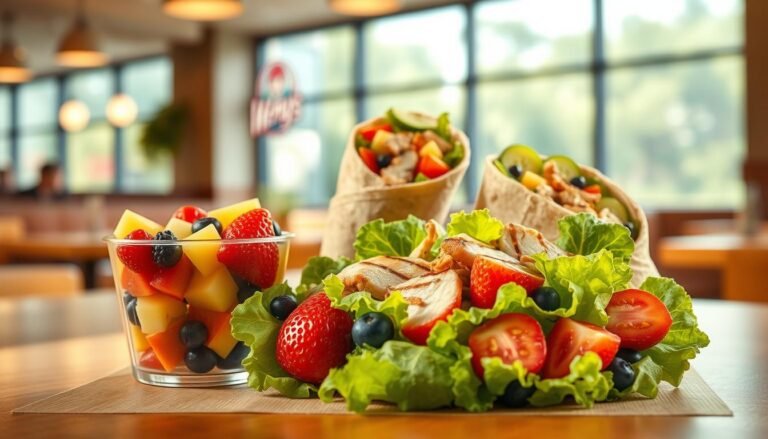
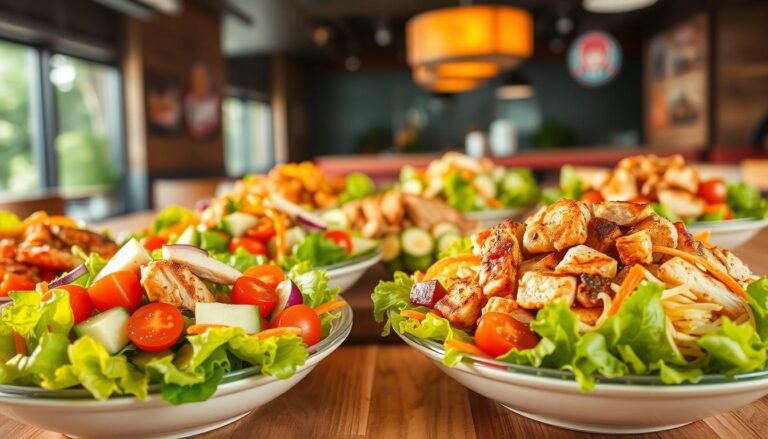
Salads often give us the fewest ingredient surprises when we ask for simple swaps and skip crunchy add-ons.
The Garden Side Salad and Caesar Side Salad become much lower risk if we request no croutons. We always confirm staff removed croutons and that dressings are poured separately.
Meal-style and chicken-salad options
The Taco Salad is a strong go-to for a full meal. We watch for tortilla strips or crispy shells and ask to leave those off if present.
Many chicken salads list breaded or handled chicken. We often order Apple Pecan Chicken Salad and other chicken salads without chicken to keep the greens, fruit, nuts, and cheese while avoiding breading risk.
Handling crunchy add-ons
Crunchy toppings like croutons and crispy onions are common wheat sources. Our approach: ask they be left off, request clean gloves, and get dressing on the side.
| Salad | Common gluten-risk component | Suggested modification |
|---|---|---|
| Garden Side Salad | Croutons | Order without croutons; dressing on side |
| Caesar Side Salad | Croutons, Caesar dressing may contact utensils | No croutons; confirm separate assembly |
| Taco Salad | Tortilla strips, crispy taco shell | Skip crunchy shell; keep beans/veggies |
| Apple Pecan (no chicken) | Breaded chicken, shared prep | Remove chicken; keep apple, pecans, cheese |
Gluten-Free Salad Dressings and Toppings We Can Mix and Match
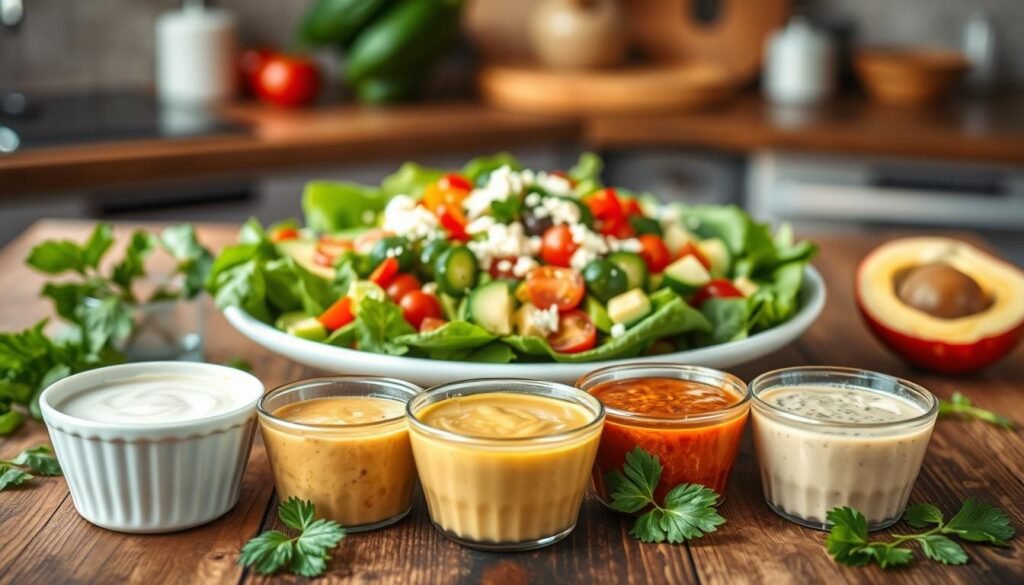
Choosing the right dressing and a short list of toppings keeps our salad orders predictable and safer. We stick to dressings the brand lists as gluten-free and confirm ingredients on the website when in doubt.
Dressings listed as gluten-free options
The chain commonly lists these as suitable: Italian Vinaigrette, Lemon Garlic Caesar, Ranch, BBQ Ranch, Light Honey French, Light Ranch, Thousand Island, Light Spicy Asian Chili Vinaigrette, and Pomegranate Vinaigrette.
We check the ingredient panel on the website for thickeners, malt, or flavorings that could hide wheat. Our tolerance guides which dressings we choose.
Toppings and mix-and-match choices
Good crunchy and nutty add-ons include Sunflower Seeds, Spicy Roasted Cashews, and Roasted Pecans. These boost texture and keep the salad filling.
Cheese and bacon make salads more substantial. We still confirm their listed ingredients and ask for separate handling to reduce cross-contact risk.
| Item | Why we like it | Prep note |
|---|---|---|
| Italian Vinaigrette | Simple ingredients, light | Verify on website; request on side |
| Roasted Pecans / Cashews | Add crunch and calories | Keep in sealed containers; avoid shared scoops |
| Sunflower Seeds | Low-ingredient topper | Ask staff to add with clean scoop |
- Order language we use: “No croutons, dressing on the side, seeds and nuts only.”
- Keep the topping list short to reduce error and cross-contact.
Baked Potatoes and Chili: Hearty Gluten-Free Menu Items
We favor baked potatoes and chili when we want a hot, filling choice with few ingredients to vet. These items avoid buns, batter, and fryer oil—so they cut many common risk points.
Plain baked potato and Sour Cream & Chives
The Plain Baked Potato is the simplest pick. It contains minimal ingredients and is served without breaded components.
Sour Cream & Chives adds a small number of recognizable toppings. Simplicity lowers both ingredient surprises and handling steps.
Cheese, bacon, and broccoli & cheese potato builds
Common builds include Cheese; Bacon & Cheese; and Broccoli & Cheese. Each adds familiar ingredients—cheese and bacon—so we can check labels quickly.
Ask how toppings are stored and applied. Request cheese or bacon from sealed containers and tell staff to use clean utensils when possible.
Why chili is considered gluten-free (per published ingredients)
The chain’s chili shows no wheat-containing components in ingredient lists, which is why many consider it gluten-friendly. We still treat ladles and topping bins as potential cross-contact points.
A popular pairing is a chili & cheese potato. It’s hearty and needs little customization compared to sandwiches, so it reduces ordering complexity.
| Item | Ingredient risk | Prep note |
|---|---|---|
| Plain Baked Potato | Low | Confirm no added sauces |
| Sour Cream & Chives | Low | Request fresh spoon/clean handling |
| Chili & Cheese Potato | Low (per ingredients) | Watch for shared ladles; ask for clean serving tools |
- Keep toppings simple to reduce error.
- Ask for utensils or ladles to be changed when possible.
- Pairing chili with a baked potato gives a filling meal with fewer unknowns.
Fries and the Fryer Problem: What “Shared Oil” Means for Gluten
A simple order of fries raises a complex question: are ingredients or prep the bigger risk?
By ingredients, the fries are straightforward—potatoes, salt, and oil. The restaurant’s published list often shows no wheat in the recipe.
By preparation, the picture changes. The fries cook in shared fryer oil alongside breaded items like nuggets. Tiny crumbs and batter pieces enter the oil. That creates cross-contamination that transfers wheat proteins into the cooking oil and then onto fries.
How cross-contamination happens in a shared fryer
Shared baskets, simultaneous drops, and circulating crumbs raise the prep risk. During busy periods, crumbs stay in the oil and coat later batches.
Most locations cannot dedicate a separate fryer for fries. That means fries may be acceptable for mild sensitivity but unsafe for strict avoidance.
| Item | Ingredient status | Fryer/prep risk | What we can do |
|---|---|---|---|
| Fries | No wheat listed | High (shared oil with breaded items) | Ask if a separate fryer is used; choose alternatives if unsure |
| Nuggets / Breaded sides | Contain wheat | Very high (directly add crumbs to oil) | Avoid if strict; assume cross-contact |
| Limited-time fried items | May include wheat | High (added during peaks) | Check prep notes on website; avoid during rush |
- Ask staff: “Do you use the same fryer oil for fries and breaded items?”
- If the answer is yes, choose baked potato, side salad (no croutons), apple slices, or chili instead.
Frosty, Drinks, and Sweet Treats That Stay Gluten-Free
Our pick-me-up options—creamy desserts and straightforward drinks—are often the lowest-risk items to order.
The classic frosty is available in chocolate and vanilla. Typical ingredients list milk, sugar, corn syrup, cream, whey, nonfat dry milk, stabilizers, and cocoa for the chocolate version. That mix generally avoids wheat-based ingredients.

Ingredient notes and handling cautions
Because machines and counters are shared, we still treat desserts as “gluten-friendly” rather than guaranteed. If we are highly sensitive, we ask staff about mixing equipment and surfaces before ordering.
Drinks and pairing ideas
Good drink options include carbonated soft drinks, iced or hot teas, milk, lemonade, and strawberry lemonade. These pair well with a frosty and add little extra risk.
| Item | Why we like it | Prep note |
|---|---|---|
| Chocolate Frosty | Creamy dessert, simple ingredients | Check mixing machine handling |
| Vanilla Frosty | Fewer flavor additives | Lower ingredient surprises |
| Drinks | Straightforward, low risk | Confirm no seasonal syrups |
Practical combos: chili + baked potato + frosty, or bunless burger + side salad + iced tea. Always check seasonal items on the menu for ingredient changes before assuming they are safe.
Chicken, Nuggets, Breakfast, and Bakery Items We Should Avoid
We treat any breaded or battered chicken as high risk for wheat exposure. Breading uses flour-based coatings and is cooked in shared fryers. That creates cross-contact that even removing the bun cannot fix.
Why chicken nuggets and breaded chicken are off-limits
Chicken nuggets and breaded sandwiches rely on wheat in coatings. Fryer oil and crumbs spread proteins across batches. For strict avoidance, these chicken choices are not safe.
Breakfast wheat traps to skip
Biscuits, sausage gravy, English muffins, and French toast sticks all contain wheat or are handled near crumbs. Breakfast stations are crumb-heavy and raise exposure for other items on the counter.
Bakery desserts and sweet items
Cookies, bars, and oatmeal-style bakery treats use wheat flour by design. Choosing them can turn a safe meal into a reaction risk.
- Decision rule: if it’s breaded, baked like a cookie, or built on a bun/biscuit/muffin, avoid it.
- Skip fried chicken, chicken nuggets, breakfast biscuits, and bakery desserts.
| Category | Typical wheat presence | Preparation risk | Recommendation |
|---|---|---|---|
| Breaded chicken / nuggets | High (wheat coatings) | Very high (shared fryers, crumbs) | Avoid entirely for strict avoidance |
| Breakfast biscuits & gravy | High (wheat in dough and gravy) | High (crumby stations) | Do not order if sensitive |
| English muffins / French toast sticks | High (wheat bread) | High (shared grills, toasters) | Avoid; choose potatoes or salads |
| Bakery cookies & bars | High (wheat flour) | Medium (packaged but contains wheat) | Skip and pick a frosty or fruit instead |
How to Order More Safely: Reducing the Risk of Cross-Contamination
A few clear steps at the counter or drive-thru help us cut cross-contamination risk. We state our needs, ask for basic prep changes, and confirm ingredients on the website before we order.
Practical requests to make at the counter or drive-thru
Use this short script: “We have a wheat sensitivity. Please use fresh gloves and clean utensils, and keep sauces separate.” Saying this once at ordering helps staff prepare.
- Ask for fresh gloves and a new utensil or spoon for toppings.
- Request dressing on the side and fewer toppings to simplify assembly.
- Confirm a menu item’s ingredients on the website if you are unsure.
When to skip an item and red-flag situations
We skip items if staff cannot change gloves or if the item uses a shared fryer. Avoid anything that is clearly breaded or relies on shared oil.
| Situation | Why it matters | Action |
|---|---|---|
| Shared fryer | High transfer of crumbs and batter | Choose potato, salad, or chili instead |
| Staff unsure about “no bun” | Prep errors raise cross-contamination risk | Ask to speak to a manager or skip the item |
| Unknown ingredients | Supplier changes can add wheat | Check the website ingredients before ordering |
We remain polite but firm. The chain cannot promise zero cross-contact, so our judgment and these steps are our final safeguard.
Making Wendy’s Work for Us: A Practical Gluten-Free Ordering Game Plan
We finish with a focused playbook for repeatable, safer orders at the counter or drive-thru. Use the wendy gluten-free menu online to check allergens, then pick one of our default builds: a bunless burger with simple toppings, a salad without croutons or chicken, a baked potato with basic toppings, or chili with a plain side.
Before ordering, confirm ingredients on the menu, decide modifications, and state one clear request: “Please use fresh gloves and separate utensils.” Keep one or two go-to orders you tolerate and stick to them while traveling.
Our goal is safer food, not perfection. Shared kitchens matter, so re-check published ingredient info each time and order with clear communication to reduce risk.