Wendys Nutrition Menu
We created a concise buyer’s guide that compares common choices across breakfast, burgers, chicken, salads, sides, desserts, and drinks. Our goal was practical: help readers make sensible fast food orders using published facts that were current as of 10/14/2025.
We explain how we used official item facts to build a simple list that pairs a main, a side, and a drink. We focused on calories, sodium, portion size, and common add-ons so you can see where hidden impacts come from.
We also set realistic expectations: this is about moderation and customization, not perfection. Later sections point out typical best picks, like smaller portions, certain salads without full dressing, or controlled nugget orders.
How We Use Nutrition Facts to Compare Wendy’s Menu Items</h2>
We started from the brand’s published nutrition facts and used a practical filter mindset to narrow choices for real orders. Our goal was to show how simple limits help compare items without overcomplicating things.
What matters most: calories, sodium, and portion size
Calories, sodium, and portion size are the first things we check. These three together predict how heavy a meal will feel and how much it adds to daily totals.
How add-ons change totals: cheese, bacon, dressings, and buns
Add-ons move a reasonable entrée into a high-calorie, high-sodium order fast. Cheese and bacon add both calories and sodium, while dressings and extra buns inflate portions.
Smart ordering approach: pick a main, pick a side, pick a drink
We used a “build the tray” framework: pick a main, pick a side, pick a drink, then adjust add-ons. Portion control—smaller fries, fewer nuggets, junior desserts—keeps totals in check.
- We filtered items by calorie limits and then checked sodium and portion size.
- Dietitian-style guidance helped us flag high-sodium combinations and suggest more veggies or whole-grain swaps.
- Our aim was practical: help readers compare and order with intention, not to label foods good or bad.
| Focus | Why it matters | Quick tip |
|---|---|---|
| Calories | Drives energy load | Set a cap before ordering |
| Sodium | Stacks across items | Skip extra salt or heavy sauces |
| Portion | Controls total intake | Choose smaller sizes |
Wendys Nutrition Menu: Best Picks and What to Watch For</h2>
We reviewed typical combos to spot where calories and sodium stack up and where simple swaps help. Our focus was on smaller portions, fewer add-ons, and choices that add protein or produce without heavy sauces.

Most nutritious options dietitians often recommend
Dietitian-guided picks we highlighted include the Oatmeal Bar, 4 Pc. Crispy Chicken Nuggets, and the Parmesan Caesar Salad when you control dressing. Apple Bites and a Jr. Vanilla Frosty (smaller size) are sensible treats versus larger desserts.
Common pitfalls to watch
Big drivers of excess calories are multi-patty builds, added bacon or cheese, and creamy sauces that hide extra sodium. Pairing a salty main with a salted side and a sweet drink creates fast calorie and sodium creep.
Quick counter swaps at the counter
- Hold bacon and skip cheese to cut fat and calories.
- Choose mustard over mayo and ask for half the dressing packet.
- Pick smaller sizes or an apple side and water, tea, or coffee as low-calorie drinks.
| Best pick | Example | Why |
|---|---|---|
| Lower-calorie items | 4 Pc. Nuggets, Oatmeal Bar | Protein or fiber with smaller portions |
| Watch for | Multi-patty burgers, loaded sandwiches | High calories and sodium from stacked add-ons |
| Simple swap | Apple Bites, Jr. Frosty | Smaller portions limit calorie creep |
Decide on a full meal plan before ordering so you avoid adding an item that pushes totals well past your target.
Breakfast Nutrition Guide: Sandwiches, Burritos, and Sweet Starts</h2>
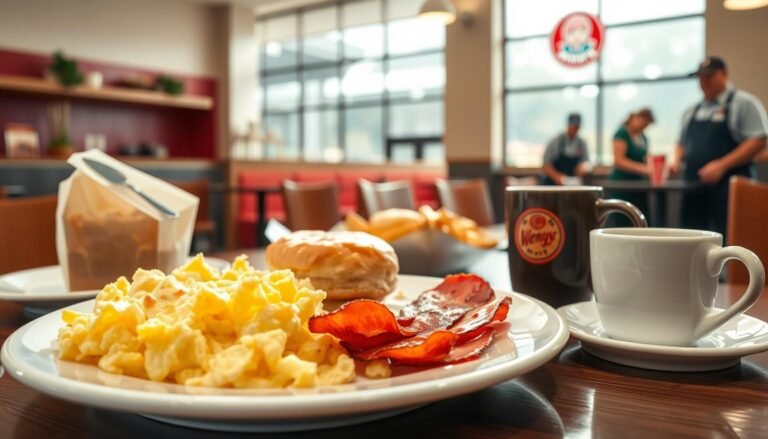
Morning orders often hide big calorie and sodium jumps, so we break down common breakfast picks. We focus on choices that fit a calorie-focused morning and show quick swaps that lower totals.
Better breakfast snapshot: Oatmeal Bar
The Oatmeal Bar is often our go-to for lower calories. It has about 280 calories and roughly 230 mg sodium. That makes it a sensible start when we want fiber and a lighter load.
Heavier example: Breakfast Baconator
The Breakfast Baconator is a stacked item with about 730 calories and very high sodium. We treat it as an example of how layered egg, bacon, cheese, and buttery bread push totals up fast.
Sandwich comparisons and sides
Egg & Cheese Biscuit runs about 360 calories. The Bacon, Egg & Swiss Croissant is near 410 calories. Small Seasoned Potatoes add 230 calories and French Toast Sticks (4) add about 450 calories.
How we lighten a morning order
Skip cheese or bacon when possible, avoid combo upgrades, and swap a side for Apple Bites (35 calories). Also choose a lower-calorie drink to keep the whole meal balanced.
| Item | Calories | Sodium (mg) | Quick tip |
|---|---|---|---|
| Oatmeal Bar | 280 | 230 | Light, fiber-rich start |
| Breakfast Baconator | 730 | ~1670 | Avoid when watching calories |
| Egg & Cheese Biscuit | 360 | — | Skip cheese to cut fat |
| French Toast Sticks (4) | 450 | — | Share or replace with apple |
Burgers and Cheeseburgers: Calories, Cheese, Bacon, and Portion Control</h2>
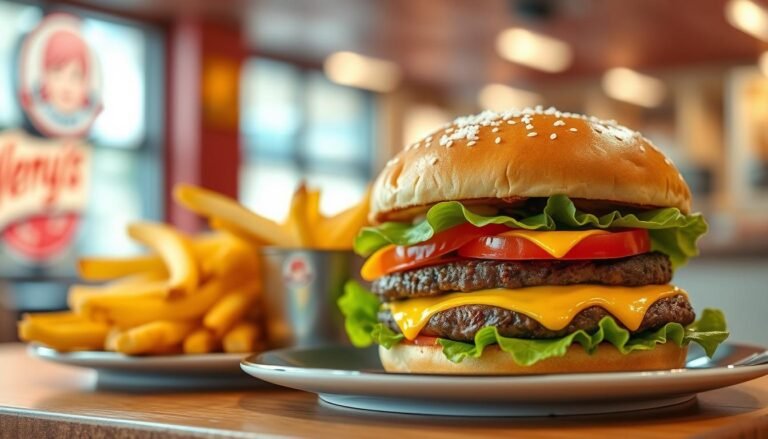
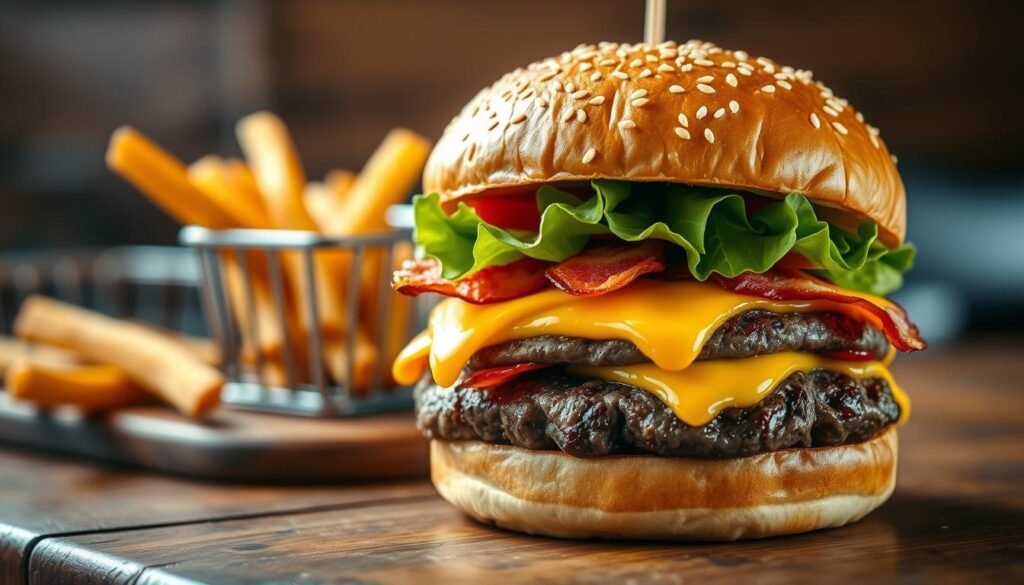
Our focus here is on how patty count and add-ons change calories and sodium in typical burger orders. We compare common builds so you can pick a smaller item when you want to save calories and sodium.
Lower-calorie choices
We point to the Jr. Hamburger (250 calories) and the Jr. Cheeseburger (290 calories) as sensible portion-control picks. A Jr. Bacon Cheeseburger is about 370 calories and shows how one topping raises the total.
Mid-range classics
Mid-size options climb from the Double Stack Cheeseburger (410 calories) to Dave’s Single Cheeseburger (590 calories). These items add more meat and cheese, which drives most of the calorie increase.
Highest-calorie builds to limit
Large builds can dominate daily intake. Dave’s Double (860 calories), the Baconator (960 calories), and Dave’s Triple (1100 calories) are items we limit most often.
- No cheese or no bacon to cut fat and calories.
- Swap mayo for mustard to cut calories and reduce sodium impact.
- Add lettuce and tomato to add volume without many calories.
| Item | Calories | Why it matters |
|---|---|---|
| Jr. Hamburger | 250 | Portion control |
| Jr. Cheeseburger | 290 | Small cheese boost |
| Baconator | 960 | Very high calories |
Chicken Sandwiches and Nuggets: Grilled vs Crispy Choices</h2>
For chicken orders we focus on portion, cooking method, and toppings to keep calories predictable.
Nuggets for portion control
We recommend nuggets when we want a predictable, smaller portion. The 4 Pc. Chicken Nuggets run about 180 calories and the 4 Pc. Spicy Chicken Nuggets are roughly 190 calories.
Sandwich comparisons
Not all chicken sandwich builds track the same. A Crispy Chicken Sandwich lists about 330 calories while a Grilled Chicken Sandwich is near 350 calories. Breading, sauce, and bun can flip expectations.
Loaded builds and wraps
Loaded styles show large jumps: Pretzel Bacon Pub Classic Chicken is about 830 calories; the grilled Pretzel Bacon Pub is 710 calories. Spicy Hot Honey Chicken registers 710 calories; the Grilled Hot Honey option is 560 calories.
The Grilled Chicken Ranch Wrap is about 420 calories, so wraps can add sauce and cheese calories quickly.
- Choose grilled chicken when available to cut fried fat.
- Skip bacon or extra cheese to limit calorie creep.
- Use 4-piece nuggets to control portions and avoid heavy sauces.
| Item | Calories | Note |
|---|---|---|
| 4 Pc. Chicken Nuggets | 180 | Easy portion control |
| Crispy Chicken Sandwich | 330 | Breading increases calories |
| Grilled Hot Honey Sandwich | 560 | Lower than fried hot honey |
| Pretzel Bacon Pub Classic | 830 | Loaded toppings and bun add calories |
Salads and Dressings: Building a Healthier Wendy Menu Meal</h2>
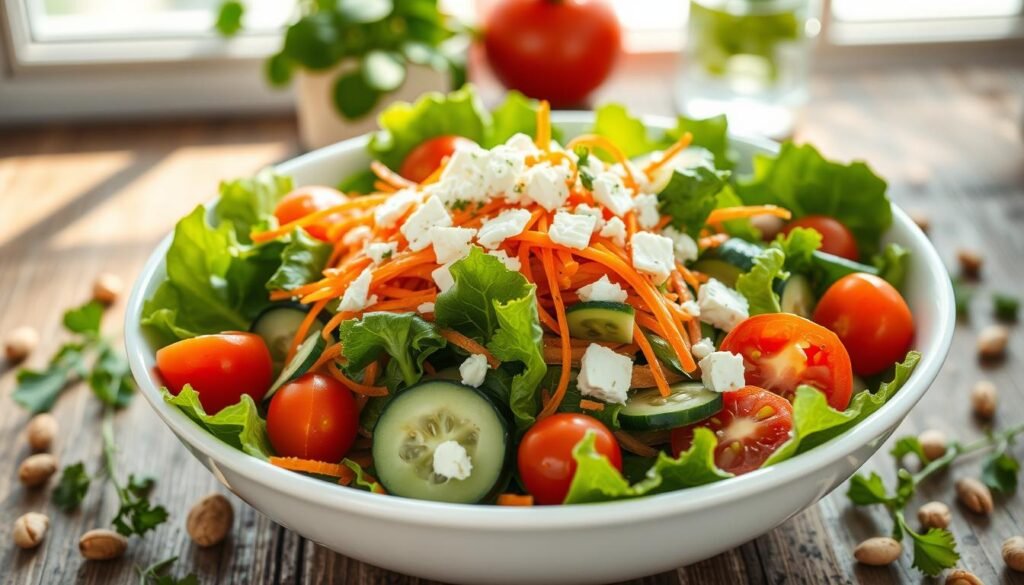
Salads often deliver the best vegetable boost on a fast-food tray when we manage dressings and crunchy add-ons.
Top pick and quick context
Our top pick by calories is the Parmesan Caesar Salad w/ Chicken at 290 calories, dressing not included. It fits a main-plus-light-side plan when we limit extras.
High-calorie salad to limit
The Taco Salad sits near 660 calories. Once you add full dressing and a sweet drink, it can match or exceed many sandwiches in total calories and sodium.
Dressing reality check
Caesar Dressing is about 240 calories per packet while Pomegranate Vinaigrette is roughly 90 calories per packet. Using half a packet cuts calories, fat, and sodium noticeably.
Other options to compare
Apple Pecan Salad w/ Chicken comes in at 410 calories without dressing. Southwest Avocado Salad w/ Chicken lists about 420 calories without dressing. Both add more mix-ins that raise totals once dressing is included.
- Favor more vegetables and grilled chicken; skip fried toppings.
- Ask for dressing on the side and use half a packet to lower calories and sodium.
- Pair a lighter salad with water or unsweetened tea instead of a sweet beverage.
| Salad | Calories (no dressing) | Why to pick or limit |
|---|---|---|
| Parmesan Caesar Salad w/ Chicken | 290 | Low-calorie protein-forward pick |
| Apple Pecan Salad w/ Chicken | 410 | More calories from mix-ins |
| Southwest Avocado Salad w/ Chicken | 420 | Higher fat from avocado and toppings |
| Taco Salad | 660 | Comparable to heavy entrées when dressed |
We framed salads as one of the most nutrient-dense categories on the menu when we control dressing and crunchy additions. A salad can be a low-calorie, high-fiber meal — or it can become a calorie-heavy plate depending on choices.
Sides That Can Make or Break Your Meal: Fries, Chili, and Baked Potatoes</h2>
Sides decide whether a tray stays balanced or suddenly goes overboard in calories. We lay out clear numbers so you can pick portions based on hunger, not habit.
Fries by size
Fries scale fast: Junior fries are 210 calories, Small 260, Medium 350, and Large 470. Choosing a smaller size trims a large share of excess calories without changing the main.
Chili as an alternative
Chili can feel more filling and warm. Small chili runs about 240 calories and Large chili about 340. It’s a useful swap when you want protein and warmth instead of extra fat from frying.
Baked potato choices and loaded sides
A plain baked potato is roughly 270 calories. Addings matter: Sour Cream & Chive clocks near 310, while Bacon & Cheese jumps to 440. Loaded options like Chili & Cheese Baked Potato (500) or Chili Cheese Fries (520) can match or exceed many mains.
| Side | Calories | Why it matters |
|---|---|---|
| Junior Fries | 210 | Small portion control |
| Small Chili | 240 | Warmer, more filling |
| Plain Baked Potato | 270 | Low-topping baseline |
| Chili & Cheese Baked Potato | 500 | Loaded side to watch |
- Cheese and bacon add big calorie and sodium hits—choose toppings carefully.
- Apple Bites (35 calories, 0 mg sodium) are our easiest low-calorie swap.
- Match a lighter side to a salty main to keep the whole meal reasonable.
Desserts and Drinks: Frosty Sizes, Lemonades, and Zero-Calorie Staples</h2>
A small dessert or a large drink can undo a careful main-and-side plan, so we focus on choices that keep totals steady.
We compare common dessert and beverage items with simple numbers so readers can pick smarter. Portion changes often give the biggest calorie wins.
Frosty portion strategy
Classic Chocolate Frosty calories by size: junior 190, small 310, medium 390, large 500. The Vanilla Frosty follows a similar pattern: junior 190, small 340, medium 450, large 570.
Dropping one size usually saves 100–200 calories and satisfies cream cravings without derailing a meal.
Cookie and high-calorie beverages
The Chocolate Chunk Cookie is about 330 calories — similar to a small sandwich in energy. Strawberry Lemonade is another hidden driver: small 230, medium 380, large 480.
Fruit teas and lemonades scale fast and add calories without much satiety.
Lowest-calorie and kid-friendly drinks
Brewed unsweetened iced tea runs 0–5 calories by size. Coffee is roughly 5 calories; decaf large can be 0.
Kid-friendly options: 1% white milk 90 calories and 1% chocolate milk 150 calories. These are straightforward choices for families and kids.
- Pick a junior Frosty or share a cookie to cut calories.
- Choose iced tea or plain coffee to protect the meal budget.
- Include milk for kids when you want a balanced sip with protein.
| Item | Calories | Quick tip |
|---|---|---|
| Classic Chocolate Frosty (junior) | 190 | Smallest sweet fix |
| Chocolate Chunk Cookie | 330 | Consider sharing |
| Strawberry Lemonade (medium) | 380 | High-calorie drink |
| Brewed Unsweetened Iced Tea | 0–5 | Zero-calorie staple |
Our Buyer’s Checklist for Healthier Wendy’s Orders Anytime</h2>
A short checklist makes ordering from the Wendy menu predictable and practical. First, set your goal: lower calories, less sodium, more protein, or a lighter meal.
Pick a smaller main—like nuggets or a modest sandwich—or a grilled chicken option. Build around it: choose apple bites or a small chili, and pick water, unsweetened iced tea, or coffee for a near-zero drink.
Follow our quick swaps: grilled over fried, hold cheese and bacon, mustard instead of mayo, and use half the dressing. Check nutrition facts for sodium and totals before you buy.
Note allergens (soy, milk, egg, wheat, nuts, fish, shellfish) and tell staff when ordering. With this checklist we can order from fast food options confidently and consistently.