Wendys vs Mcdonalds
We set out to answer a simple but often heated question: when you pick between these two national chains, which gives the better overall experience for the money and the moment? We focus on practical trade-offs that matter to most Americans who eat quick meals.
In a March 20, 2023 side-by-side taste test, the Quarter Pounder with Cheese edged out the Dave’s Single on execution and nostalgia. The fries were called the gold standard for consistency. Those results help us ground opinions in specifics rather than hot takes.
We will treat “best” as context dependent. Our practical comparison checks burger quality, fries, chicken options, pricing, and day-to-day reliability across the U.S. market. We will separate best burger, best fries, and best value so readers can pick what matters most to their food priorities.
How We’re Comparing These Two Fast Food Giants in the U.S. Today
This comparison looks less at slogans and more at what lands on your tray, bite after bite.
Head-to-head criteria we care about
We use four plain criteria: flavor, value, consistency, and menu strength. Each one maps to things you notice when you order.
- Flavor: we judge beef presence, bun quality, toppings balance, and how the build holds from first bite to last.
- Value: we consider base price, app deals, and portion satisfaction in a 2026 cost context.
- Consistency: we test repeatability across locations, packaging, and performance during rush and late-night service.
- Menu strength: we look beyond a single sandwich to the depth of offerings and reliable side options.
Why we include Burger King as a benchmark
A March 20, 2023 tasting paired the Quarter Pounder, Dave’s Single, and Burger King’s Whopper (cheese added). That three-way test gives useful context.
| Criterion | Quarter-pound benchmark | Dave-style benchmark | Whopper benchmark |
|---|---|---|---|
| Flavor focus | Execution and nostalgia | Fresh beef presence | Smoky flame profile |
| Value | High recognition, wide deals | Premium price points | Often promoted in combos |
| Consistency | Very repeatable | Some location variance | Variable build but consistent size |
Quick Snapshot: Wendy’s vs McDonald’s at a Glance
We give a brief, straightforward snapshot to highlight the most meaningful differences for everyday orders.
Fast facts: McDonald’s had a 2024 AUV of about $3.96M and roughly 13,600 U.S. locations. Wendy’s posted a $2.1M AUV with about 5,933 locations. System-wide 2024 sales were around $53.1B for McDonald’s and $12.3B for Wendy’s. Those numbers shape availability, deal frequency, and consistency on the ground.
- Who usually wins what: McDonald’s for consistency and fries; Wendy’s for fresh-beef branding and some premium builds.
- Order expectations: burger—predictable execution at scale; fries—McDonald’s consistency; chicken—check menu variety by location.
- Key contrasts to watch: build style, topping load, pricing power, and the memory factor that colors taste.
| Metric | McDonald’s | Wendy’s | Context |
|---|---|---|---|
| 2024 AUV | $3.96M | $2.1M | Higher AUV often means more uniform operations |
| U.S. locations | ~13,600 | 5,933 | Footprint affects convenience and deals |
| System sales 2024 | $53.1B | $12.3B | Scale influences pricing power |
This snapshot is a starting point. Read on for item-by-item breakdowns to match your top order—burger, fries, or chicken.
Wendys vs Mcdonalds: The Core Differences That Actually Matter
We look at how brand choices show up where it counts: the bite, the price, and the mess on the last chew. Our focus is practical—how fresh claims, execution, and build change what you taste and how satisfied you feel.
“Fresh beef” focus vs consistency-first execution
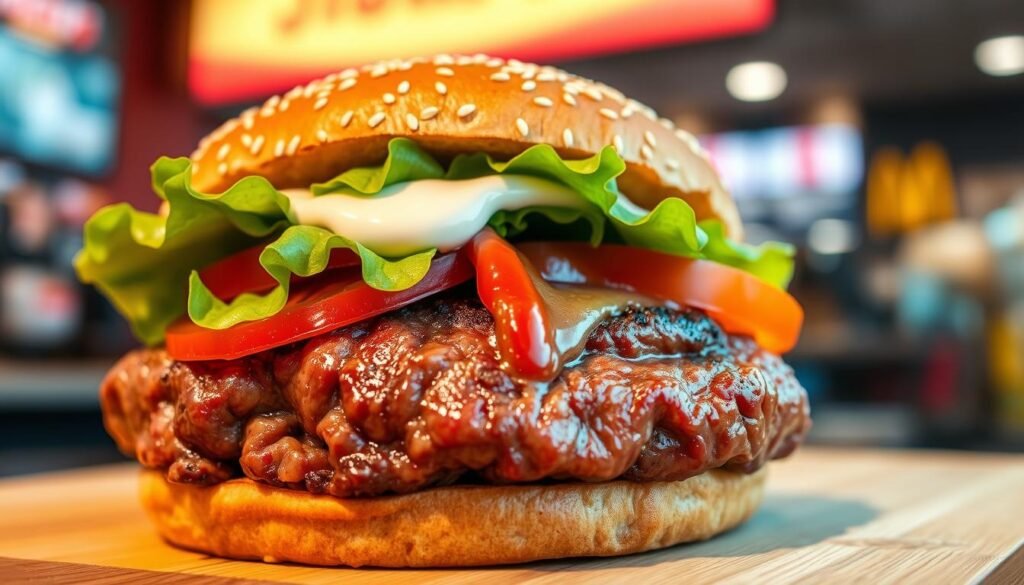
One chain leans into a fresh-beef message that aims for a fuller beef presence. In our March 2023 tasting, that sandwich tasted higher-quality but was described as overly wet and toppings-forward.
The other favors repeatable execution. Its simpler build let the patty shine and the box kept the burger looking pristine on arrival.
Premium positioning vs value-and-scale pricing power
Premium positioning shows up as a richer bun feel, more produce, and heavier topping loads. That approach can feel assembled and elevated.
Scale brings pricing leverage and frequent national promos. Consistency across thousands of restaurants sets a baseline expectation for the everyday order.
How toppings, bun, and build affect the bite
Toppings density can elevate a sandwich or blur the core meat flavor when lettuce, tomato, and mayo add moisture. Too much wetness mutes the patty’s presence.
Bun size and bread-to-beef ratio are hidden but huge. Excess bread can dilute taste, while the right balance keeps each bite focused and satisfying.
| Core difference | Practical effect | What you notice |
|---|---|---|
| Fresh-beef messaging | Stronger patty note | More pronounced beef, possible extra moisture |
| Execution-first model | Uniform results | Cleaner presentation, predictable bite |
| Build style | Toppings & bun choices | Texture, mess, and lasting satisfaction |
- We translate brand strategy into the drive-thru reality you actually use.
- Watch toppings and bun size when order clarity of beef flavor matters.
- For value or promos, scale usually wins; for a more assembled, produce-forward sandwich, premium positioning often delivers.
Burger Battle: Dave’s Single vs Quarter Pounder With Cheese
We lined up the signature single burgers to see which one keeps the patty front and center.
Patty and beef presence in the overall flavor
Our tasting showed a clear contrast. One sandwich tasted “like a real restaurant burger” but the beef was muted by a thick bun and a lot of extras.
The other mcdonald burger read as all about the beef. Fewer wet ingredients let the patty speak louder and deliver a cleaner beef note.
Bun size, bread-to-beef ratio, and bite balance
Bun size mattered. A thicker bun made the first sandwich feel top-heavy and dulled the meat.
The Quarter Pounder’s softer, right-sized bun kept the bite balanced. That bread-to-beef ratio preserved texture and focus.
Toppings and moisture: when “a lot of things” helps or hurts
The toppings-forward build included lettuce, tomato, mayo, pickles, onions, and ketchup. It felt generous but turned the burger overly wet in transit.
By contrast, a tighter stack with ketchup, onions, pickles, and mustard kept moisture in check. Less excess lets the patties register as the main event.
Nostalgia factor and why it influences “best burger” opinions
Nostalgia played heavily in impressions. Familiar packaging and a classic flavor profile can make a simpler, beef-forward sandwich feel like the “best” to many of us.
We recommend the toppings-forward single when you want a fuller sandwich. Choose the beef-and-balance option when you want the patty to lead every bite.
| Feature | Dave’s Single | Quarter Pounder |
|---|---|---|
| Patty / beef focus | Muted by extras | Beef-forward, prominent |
| Bun & balance | Thicker bun, heavy | Right-sized bun, balanced |
| Toppings & moisture | Many toppings, overly wet | Fewer wet items, cleaner bite |
| Flavor notes | Restaurant-style, layered | Straightforward, nostalgic (ketchup, onions, mustard) |
Ingredients and Freshness Claims: What We Can Verify From Recent Reporting
How a chain describes its beef matters, but the timeline behind those claims matters more.
We separate clear facts from marketing language so readers know what “fresh” actually meant in practice. Reporting shows a concrete timeline change that affected the Quarter Pounder line. That matters for texture, juiciness, and how the sandwich stands up to condiments.
McDonald’s Quarter Pounder fresh beef change since 2018
In 2018 the company began using fresh beef for the Quarter Pounder in many U.S. locations. This shift reduced thaw-related moisture and made the patty taste less processed in our tests.
Wendy’s “fresh, never-frozen” positioning and what it signals
The other brand has long promoted “fresh, never-frozen” beef as a quality signal. That positioning signals intent to prioritize fresh ingredients, but it does not guarantee a uniform outcome across years or locations.
- We document the 2018 change as a verifiable timeline fact that changed eating experience.
- Ingredients handling influences patty texture, juiciness, and how toppings affect the bite.
- Still, ingredients alone don’t decide winners; cook times and build discipline at each restaurant shape the final result.
| Claim | Verified timeline | Practical effect |
|---|---|---|
| Quarter Pounder fresh beef | 2018 | Less thaw moisture, cleaner beef note |
| Fresh, never-frozen positioning | Multiple years | Signals quality intent; flavor varies by execution |
| Outcome drivers | Ongoing | Ingredients + cook + build discipline |
Practical takeaway: if freshness claims are your priority, read timelines and expect variability. Use these facts to set realistic expectations when you order.
Fries Showdown: Wendy’s Fries vs McDonald’s Fries
For many diners, the fry is the real tiebreaker when choosing where to eat.
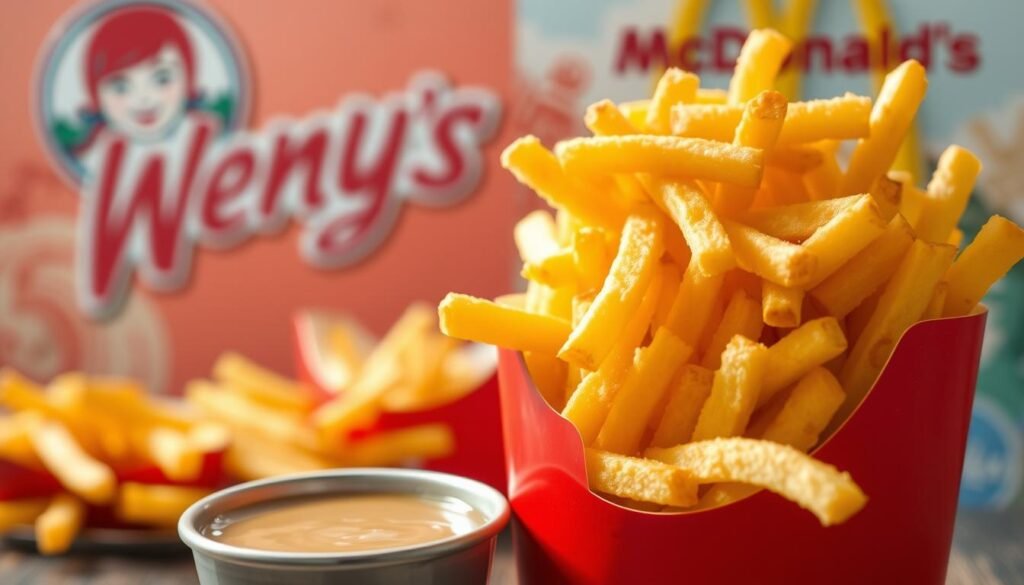
In our March 2023 tasting, one chain’s fries came off as potatoey and fair-style. The other earned the “gold standard” tag for consistent texture and a salty, savory note that includes a hint of beef extract.
Texture matters: the first fries leaned toward a thicker, potato-forward bite. The second used mixed fry sizes to keep a crisp-to-soft balance that repeats across visits.
Packaging and salt change the experience in your hand. Vented boxes keep fries crisp longer while closed bags trap steam and soften them fast. Salt calibration is a big part of why the red-box presentation often tastes top and craveable.
Practical tips for ordering
- Ask for fresh fries if you want peak crispness on site.
- Avoid delivery for thicker, potato-heavy fries; they lose texture faster.
- Pair crisper fries with saucier items; potato-forward fries work well with simple ketchup or a milder sandwich.
| Aspect | Potato-forward fries | Consistency-first fries |
|---|---|---|
| Texture | Thicker, potatoey, fair-style | Mixed sizes, crisp-to-soft balance |
| Salt & flavor | Milder, potato flavor shines | Spot-on salt, savory/beef extract note |
| Packaging/hand factor | Softens quickly in closed bags | Red-box venting keeps crisp longer |
Chicken and Sandwich Options: Which Menu Holds Up Better
Chicken often wins when heavy sauces and lots of produce are involved, because its texture resists sogginess. We test how each chain builds sandwiches and how those choices affect texture, heat, and repeatability.
When chicken beats beef for toppings-heavy builds
A crisp or breaded fillet keeps its crunch under mayo, tomato, and sauces. That means toppings add flavor rather than drown the core protein.
Pick a crispy sandwich if you want firm texture with juicy condiments. A breaded patty holds up better than a plain grilled beef patty in transit.
Menu variety and limited-time items that sway choices
Each menu includes classic and spicy chicken items, plus seasonal drops that drive visits. Limited-time flavors can change which chain feels more exciting that week.
We recommend scanning current items before you decide if novelty or a reliable classic fits your craving.
| Aspect | Texture | Heat & Sauce | Repeatability |
|---|---|---|---|
| Classic chicken sandwich | Crisp exterior, tender inside | Mild sauces, pickles | High across locations |
| Spicy versions | Same breading, added heat coating | Spice level varies by launch | Moderate; hot runs can differ |
| Limited-time items | Unique coatings or buns | Bold sauces that define the release | Low consistency; novelty focused |
- Best way to order: request extra pickles and sauce on the side for delivery to avoid sogginess.
- For crispy, choose a breaded option; for spicy, pick the dedicated spicy item; for classic, stick to the standard sandwich.
Menu Depth and Customization Across Each Restaurant Chain
Beyond headliners, menu breadth and reliable alternatives shape where we stop when we need a quick meal. Our focus is on how many steady go-to items a chain keeps ready and how edits work in real service.
Core menu items that stay consistent year after year
We look for staples that rarely change: a solid chicken sandwich, a predictable side, and an entrée that works for kids and adults. These items make restaurants useful when you do not want to gamble on a limited-time drop.
Customization expectations in modern fast food
Simple edits—no onions, extra pickles, sauce swaps—should be seamless in-store and in-app. Smooth customization adds perceived value because customers get exactly what they ordered.
- Customization helps value but can slow service or cause mistakes if staff are rushed.
- Missing edits or wrong builds hurt repeat visits more than small price differences.
- Decision rule: for mixed groups, pick the chain with deeper menus and clearer app customization—one pick covers more tastes.
| Aspect | Menu depth | Customization handling |
|---|---|---|
| Reliable items | Multiple go-tos beyond burgers | Standard edits accepted in-app |
| Group orders | Better when menus offer variety | Clear modifiers reduce mistakes |
When speed and choice both matter, we pick the chain that balances a deep menu with clean customization. That approach wins most fast food runs.
Price, Value, and Deals in the U.S. Fast Food Race
For many trips through the drive-thru, the headline price isn’t the full story. Value now includes app-only bundles, loyalty offers, and how often a chain runs a national promotion.
How scale shapes value perception at McDonald’s
Scale gives one operator clear leverage. With a 2024 AUV near $3.96M and $53.1B in U.S. sales, that size funds broad promotions and repeatable national deals.
Promotions like the $5 Meal Deal and frequent app bundles push perceived value. Customers often return for predictable savings, not just lower base prices.
Where Wendy’s premium pricing can be a downside
The smaller AUV ($2.1M) and tighter footprint mean premium positioning can hurt budget-minded diners. Combo totals may run higher when app deals are scarce.
Paying a bit more can be worth it if the burger tastes fresher and the build is consistent. But inconsistent execution erodes that premium advantage quickly.
- Compare receipts by total meal cost, included side, and drink size—not just sandwich price.
- Check if a deal requires app use; promos with add-ons can mask real savings.
- Pick the top value based on your goal: max calories per dollar, best-tasting under budget, or most reliable deal days.
| Factor | Scale-supported chain | Premium-positioned chain |
|---|---|---|
| Promotions | Frequent national deals, app consistency | Less frequent, localized offers |
| Price perception | Better perceived value via bundles | Higher base price but quality promise |
| Best use case | When you want dependable deals | When taste/quality justifies extra cost |
Consistency and Speed: The Everyday Experience at Each Restaurant
Everyday visits hinge less on menu promises and more on whether an order arrives intact, warm, and accurate. We focus on drive-thru speed, order accuracy, and how the meal looks when it reaches your car.
Execution: why small build differences feel big at scale
Small build differences—bun placement, sauce amount, or fry fill level—multiply across thousands of transactions. A tiny extra sauce dollop on one sandwich becomes a repeated problem across locations.
In-hand usability and the real test
We judge if the burger holds together and if wrappers or boxes do their job. A clean handoff means you can eat in the car without a mess.
How operational models affect speed and consistency
During peak hours, staffing and layout influence accuracy. Chains with tighter station routines tend to keep order mistakes lower and speed steadier.
- Sides expose timing errors fast—fries go cold or soggy with a small delay.
- Ask for fresh assembly if you prioritize crisp sides and a tidy sandwich.
- For predictability, choose the chain that shows the same build and timing across multiple local restaurants.
| Aspect | Common outcome | What to watch for |
|---|---|---|
| Drive-thru speed | Fast but variable | Peak-hour delays |
| Order accuracy | Often good with clear mods | Missed extras or wrong sauces |
| Meal integrity | Depends on packaging | Wrap/box quality affects hand use |
Brand Power and Marketing: Nostalgia vs Social Voice
Brand voice often sets the table before the food arrives, shaping how we score a bite. Marketing builds memory and expectation. That matters when a March 2023 tasting found the Quarter Pounder and fries “tasted like we remembered.” Nostalgia can tilt our judgment toward familiar flavors and consistent executions.
McDonald’s family-friendly global branding and familiarity
We see a global, family-friendly image that leans on decades of consistent presentation. That steady identity makes a mcdonald burger read as reliable. Consistency plus childhood memories often boost perceived flavor and trust in repeat visits.
Wendy’s social media edge and quality-first message
Wendy’s uses a sharper online voice and quality-first claims to feel current and confident. Its social persona keeps the brand in daily conversation and highlights small details—packaging, naming, signature build—that matter to fans.
| Brand | Marketing angle | Practical effect |
|---|---|---|
| McDonald’s | Global, family-friendly familiarity | Memory-driven preference; predictable flavor |
| Wendy’s | Witty social voice, quality messaging | Feels modern; emphasizes small things that drive loyalty |
| Burger King | Challenger identity | Acts as reference point in burger debates |
We recommend readers note how branding primes taste. Recognizing that bias helps choose by today’s craving, not only by old loyalties.
Market Reality Check: Sales Scale, Locations, and What It Means for Customers
Where a chain sits on the map and how much each store sells changes your everyday experience. We translate AUV, footprint, and same-store trends into what you notice at the drive-thru.
Average Unit Volume in 2024
Average Unit Volume shows how busy a typical store is and how much capital a brand can invest in upgrades and promotions.
Footprint and convenience in the United States
More locations usually mean closer access, later hours, and steadier staffing. That matters for late-night runs and consistent deal availability.
Same-store sales notes and what promotions can change
Promotions move traffic. A strong national deal can lift same-store sales fast and improve freshness of popular items like fries.
| Metric | McDonald’s | Wendy’s | Burger King |
|---|---|---|---|
| 2024 AUV | $3.96M | $2.1M | $1.63M |
| U.S. locations (end 2024) | ~13,600 | 5,933 | 6,701 |
| System sales 2024 (U.S.) | $53.1B | $12.3B | — |
| Same-store trend notes | Q4 2024 hit by an outbreak; recovery spend; Q2 2025 +2.5% with deals | +4.1% in 2024 with October promo spike | Momentum in Q2 2025 from renovations and pricing |
Takeaway: scale doesn’t guarantee better food, but it often buys consistency, more frequent deals, and quicker rollouts of improvements. Burger King plays a key role as a pricing and promo pressure point that shapes how the larger players respond.
Franchise Economics: Why These Chains Compete So Differently
The money behind each brand affects what you see in the restaurant. How much a franchisee must invest and the support they get changes pricing, staffing, remodeling, and the speed of new menu rollouts.
Upfront investment and financial requirements
Some brands require steep upfront capital and high liquid assets, which narrows ownership to well-capitalized operators. Others lower the entry barrier but rely more on third-party funders. Those choices shape how quickly locations upgrade equipment and refresh interiors.
Support, training, and operational leverage
Training length and on-site help matter. One brand runs a 12–16 week training program for new operators. Another assigns dedicated support teams. A third keeps a corporate stake in about 20% of stores, which helps spread operational learning fast.
Profitability ranges and what better returns show
Profitability varies. burger king reports average per-store profit near $205,000 with top operators above $275,000. Higher returns let owners fund remodels, offer more staff hours, and run aggressive promos without hurting unit economics.
- Franchise economics shape price, consistency, and deal frequency.
- McDonald’s-style high barrier often means steadier execution; Wendy’s-style lower entry can create local variance.
- burger king’s lender ties and DiversityFran participation help expand and upgrade stores regionally.
| Aspect | High-investment brand | Mid/low-investment brand |
|---|---|---|
| Upfront cost | High | Moderate to low |
| Training/support | Extensive, corporate-backed | Dedicated teams, lender partnerships |
| Typical profitability | Higher returns possible | Average ~ $205,000 (burger king data) |
Our Bottom Line: Which One We’d Choose for Burgers, Fries, and Overall Value
We weighed texture, salt, and repeatability to name winners for burgers, fries, and overall value.
For burger we pick the mcdonald burger for its simple, beef-forward build. Fewer extras let the patties carry the last bite instead of getting lost in wet toppings.
For fries, choose the chain known for consistent crispness and balanced salt. Those fries hold from counter to couch and repeat across locations.
For chicken, pick the crisp sandwich when you want bold flavor without sogginess. Ketchup and onions can sharpen a bite, but too many wet toppings mute the core protein.
Choose McDonald’s if you want a classic, reliable combo. Choose the other chain if you prefer a loaded, produce-forward wendy burger experience.
Our repeat order: a simple burger with extra pickles, a fresh side of fries, and chicken when we crave a crunch—sauce on the side for delivery.